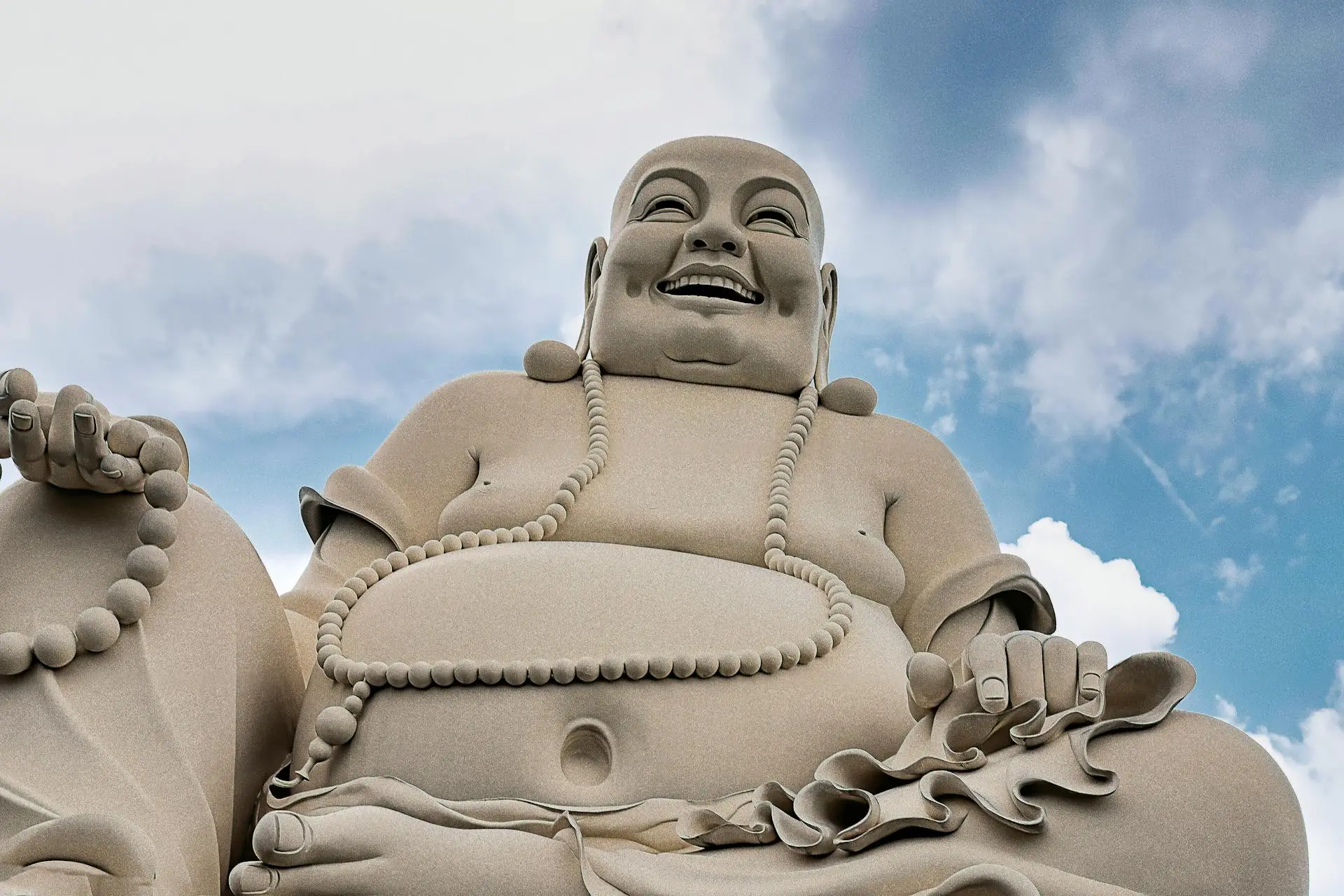
The Buddha’s laughter (or more broadly, the laughter of an enlightened being in the Buddhist tradition) is one of the deepest and most characteristic motifs in Buddhism—it appears in many sutras, Zen stories, tantric texts, and oral transmissions. It is not a malicious, cynical, or even “joyful” laughter in the ordinary sense. It is a laughter born from fully seeing the truth—and simultaneously from the total rejection of the need to cling to any version of the truth.
1. Historical and Canonical Context Link to heading
The most famous “Buddha’s laughter” appears in the Lankavatara Sutra and in many Zen transmissions (e.g., in “The Gateless Gate” or in the stories of Huineng and other patriarchs). The most classic scene is the moment when the Buddha, upon awakening under the Bodhi tree, simply smiled (he did not laugh out loud, but this smile was so profound that it became legendary). In Zen, this smile is transmitted beyond words—in the famous story where the Buddha remains silent when asked about the Dharma, holds up a flower, and smiles—and Mahakasyapa understands and smiles back. This is the beginning of the Zen lineage.
In Mahayana and Vajrayana texts (e.g., in the tantras), a louder, more robust laughter of the Buddha appears (Hasa, Hasita)—especially in the forms of Heruka, Vajrapani, or Padmasambhava. This laughter is HA HA HA—loud, vibrating, and shattering illusion.
2. What This Laughter Really Means – Layer by Layer Link to heading
Layer 1: Laughter at the Absurdity of Suffering
The Buddha sees that all suffering (dukkha)—birth, old age, sickness, death, desire, hatred, delusion—stems from one simple mistake: we take something impermanent, insubstantial, and non-self to be “I” and “mine.” When this is seen, the absurdity is so immense that the only adequate response is laughter. Not a laughter of contempt, but a laughter of relief: “For so many lifetimes, I took this seriously?!”
Layer 2: Laughter at the Illusion of “Self”
When the ego / sense of a separate “I” completely dissolves—there is no longer anyone who could suffer, fear, long, or want. There is no subject who could say, “I am unhappy.” There isn’t even an “I who has been liberated.” Laughter is the reaction of emptiness to itself—pure, impersonal joy.
Layer 3: Laughter as the Highest Form of Compassion
In the Vajrayana tradition, the laughter of the Buddha / Heruka is the strongest medicine for the suffering of others. When someone is in great pain and suddenly hears this laughter—something inside them breaks. The illusion of “I suffer” loses its power because the laughter shows: “This is not real; it’s just a game.” That is why laughter is so powerful—it shatters suffering faster than any words or meditation.
Layer 4: Laughter as the Sound of Dharma
In some texts (e.g., tantric), the Buddha’s laughter is considered one of the highest sounds of mantra—louder than OM, purer than HUM. HA HA HA is a vibration that directly dissolves dualism (self / non-self, samsara / nirvana, suffering / joy).
How This Laughter Looks in Practice (in living people) Link to heading
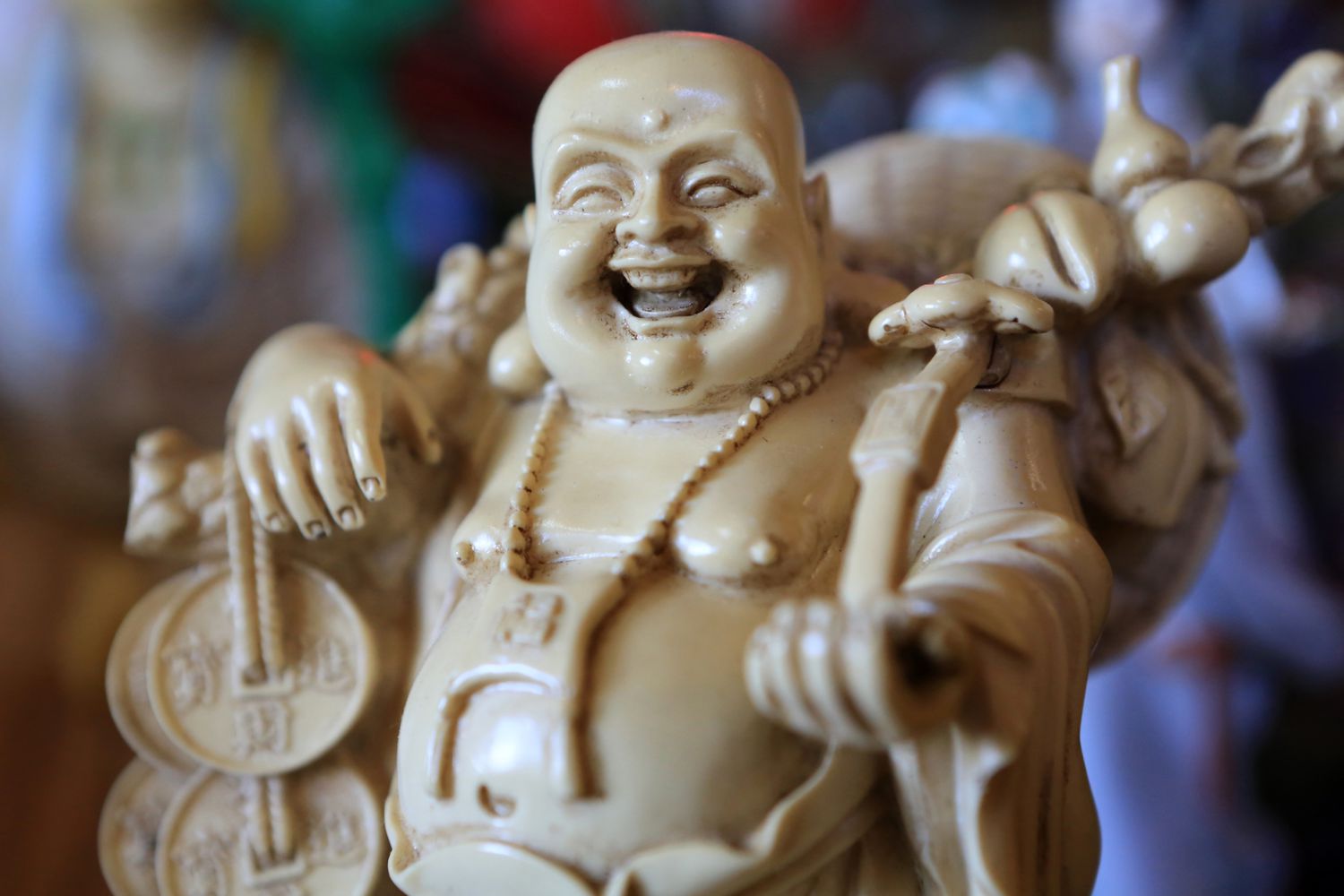
- First, it is quiet, internal—as if someone in the belly were laughing to themselves.
- Then it becomes louder, robust—because the absurdity is too great.
- Sometimes it is accompanied by tears—not of sadness, but of relief and gratitude.
- It often appears for no reason—you look at a cup, at the street, at your own hand, and suddenly: “Haha, seriously, was all of this an illusion?”
- Over time, it becomes a constant background—not a loud laugh, but an ever-present inner smile, even when the body cries or hurts.
This is not the laughter of an “enlightened guru” looking down from above. It is the laughter of someone who truly believed in the Wizard of Oz—and then saw that behind the curtain, there is only a little man with speakers.
And that is exactly why it is so beautiful and so true.
This is the laughter that says: it’s all over now.